
A practical guide to modern homesteading in Europe, blending traditional rural skills with modern technology, sustainability, and everyday comfort.
-
Homesteading, The Cost of Convenience
While modern European city life delivered many benefits, it also introduced new challenges. Long commutes replaced long days in the fields. Office pressure replaced physical fatigue. Convenience replaced connection. Food became something imported and purchased rather than grown and understood. Work became increasingly abstract, disconnected from tangible outcomes.
For many, this created a sense of disconnection. Daily life became dependent on systems beyond individual control, global supply chains, energy markets, housing pressures, and corporate structures. Life accelerated, but personal fulfilment did not always follow.
Now, with digital connectivity, remote work, and improved rural infrastructure across the EU, more people are reassessing what progress truly means.
-
Homesteading, Returning to the Land in a Modern World
For much of European history, life revolved around the land. Food production, work, family, and identity were closely tied to soil, seasons, and local self-sufficiency. Across rural Europe, farming shaped communities for generations. Yet within just a few decades, that connection weakened. Our parents and grandparents, many of whom were raised on farms or in rural villages, made a conscious decision to leave rural life behind. They moved toward cities, factories, offices, and suburbs across the European Union, seeking opportunity, stability, and modern living standards.
Today, however, a quiet shift is underway. More Europeans are once again looking toward the countryside, not to escape progress, but to combine rural living with modern technology, infrastructure, and convenience.
-
A New Kind of Homesteading
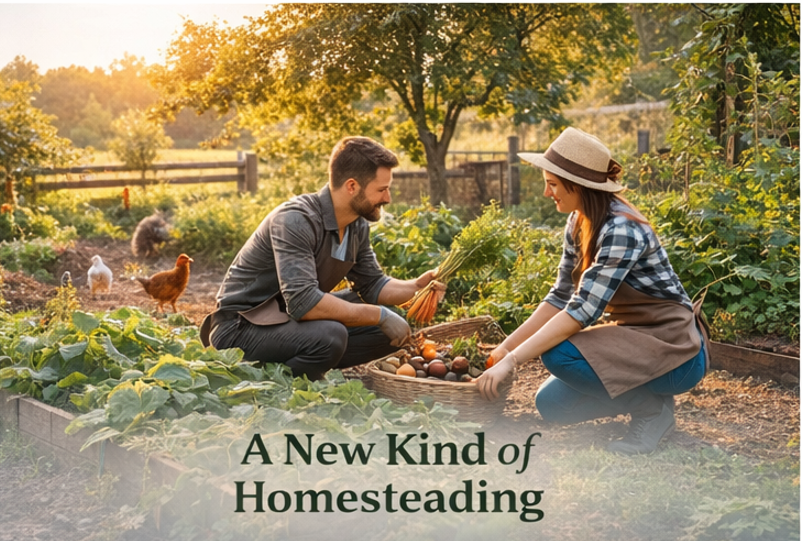
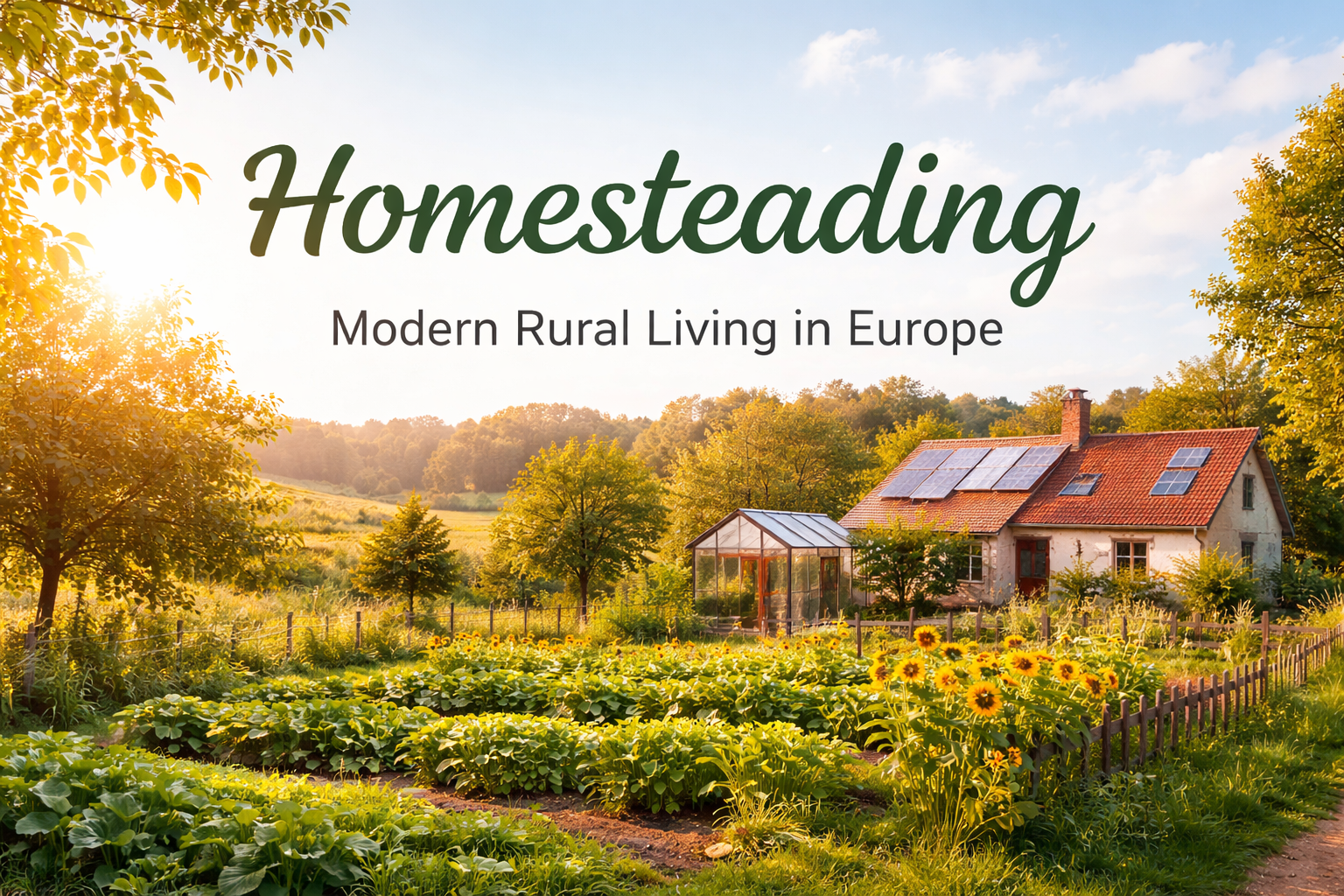
Modern homesteading in Europe is not a return to hardship—it is a reinvention. Unlike the farms our grandparents left, today’s homesteads benefit from high-speed internet, reliable electricity, modern plumbing, renewable energy solutions, efficient appliances, and advanced tools.
Washing machines replace washboards. Freezers preserve harvests. Compact tractors and modern equipment reduce physical strain. This new generation is not rejecting modern life; it is choosing which parts truly add value.
People grow food not out of necessity, but choice. They raise animals on a scale that fits modern European lifestyles. Skills like preserving, repairing, and building are reclaimed—not because survival demands it, but because purpose does.
This form of homesteading often aligns with European values of sustainability, resilience, and environmental responsibility. It reconnects people with food systems, reduces dependency, and restores practical knowledge once considered normal across rural Europe.
-
Why People Are Moving Back to the Countryside
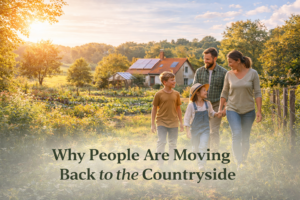
The renewed interest in rural living across the European Union goes beyond nostalgia. Many are drawn by the promise of a calmer, healthier way of life. Open landscapes replace traffic congestion. Natural rhythms replace constant digital pressure. Children grow up learning patience, responsibility, and respect for seasonal cycles.
There is also growing awareness of mental and physical wellbeing. Even part-time work with land or gardens offers visible results and personal satisfaction. Growing food, harvesting produce, or repairing something tangible creates a sense of competence often missing from modern urban life.
At the same time, modern utilities have transformed rural accessibility. Today, it is possible to enjoy fresh eggs in the morning, run a dishwasher at night, and attend an online meeting the next day all from a countryside home. The divide between rural and modern European life is no longer as clear as it once was.
-
Bridging Generations
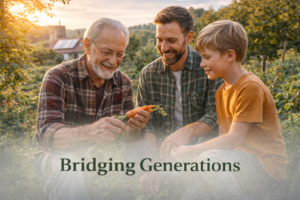
Modern homesteading bridges generations. It explains why our grandparents left rural life: the old system was often unsustainable. At the same time, it recognises that modern technology, knowledge, and flexibility allow for a better balance today.
This movement is not about going backwards. It is about moving forward intentionally, combining traditional wisdom with modern European infrastructure. It values self-reliance without isolation, hard work without burnout, and progress without disconnection.
As more Europeans reconsider where and how they want to live, the countryside is no longer something to escape from. It is something to return to, thoughtfully, deliberately, and on new terms.
-
Why Our Parents and Grandparents Left the Farm
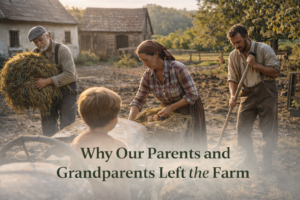
To understand today’s renewed interest in homesteading across Europe, it’s essential to understand why so many left it in the first place. For earlier generations, farming was not a lifestyle choice, it was survival. It meant long days of physical labour, unpredictable income, and total dependence on weather and seasonal cycles. There were few guarantees, limited social protections, and little recognition for the work being done.
As industrialisation expanded across the European Union, cities offered what farms often could not: stable wages, predictable working hours, access to education and healthcare, and developing infrastructure. Mechanisation reduced the need for manual labour, small farms struggled to compete, and profit margins continued to shrink. Many parents actively encouraged their children to pursue “better” careers, ones that did not depend on rainfall, market volatility, or physical endurance.
Electricity, plumbing, and modern utilities arrived late in many rural European regions. Urban life, by contrast, promised comfort, convenience, and upward mobility. Leaving the farm was not abandoning tradition; it was an act of responsibility and hope for the next generation.
-
Sustainable Living and Self-Sufficiency
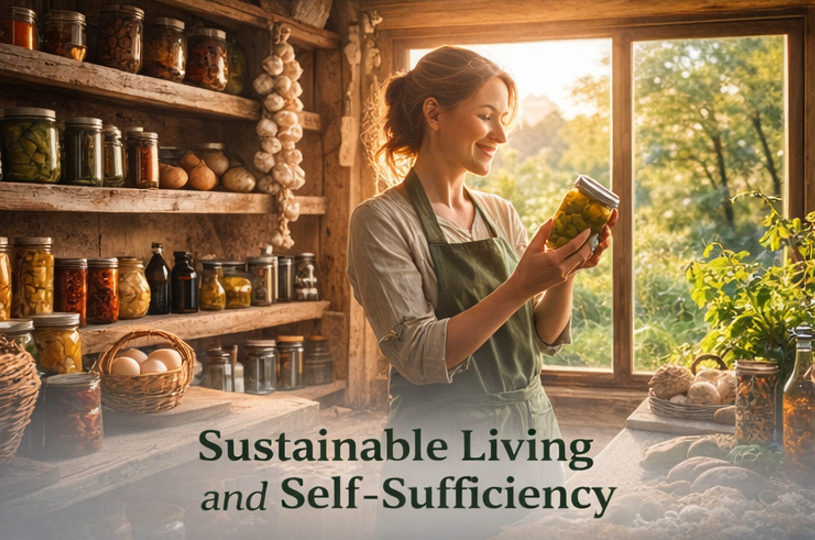
Sustainable living in Europe often begins with practical, everyday decisions rather than major lifestyle changes. Reducing household waste, managing energy use, growing some food, and repairing instead of replacing are simple steps that improve long-term resilience and reduce dependence on external systems.
Self-sufficiency today is not about isolation, but preparedness. Knowing how to meet basic needs, food, heat, and maintenance, creates flexibility when costs rise or services become unreliable. Even partial self-sufficiency can lower expenses and increase confidence in daily life.
Modern technology supports this approach. Energy-efficient homes, renewable energy solutions, and access to shared knowledge make sustainable living achievable without sacrificing comfort. In this way, sustainability becomes a practical tool for stability rather than an ideal to chase.
-
My First Steps Towards Homesteading
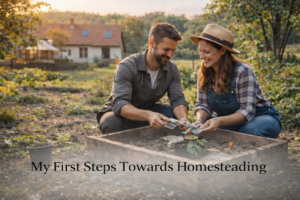
Homesteading rarely begins with a dramatic life change. For most of us, it doesn’t start with buying land, keeping animals, or leaving everything behind. It starts quietly, often with soil under our fingernails and a simple decision to grow something ourselves.
My first steps toward homesteading didn’t come from a grand plan. They came from curiosity. From the desire to reconnect with food, nature, and the satisfaction that comes from creating something tangible. And it turns out that the easiest way to begin is also one of the most rewarding: building a small raised bed and growing your own herbs and leafy vegetables.
-
The Natural Next Step: A Small Greenhouse
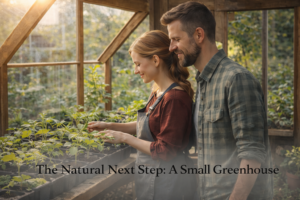
Once the raised bed is established, the idea of a greenhouse feels like a natural evolution rather than a big leap. A small greenhouse doesn’t need to be expensive or complex. Even a compact structure extends the growing season, protects young plants, and opens the door to experimenting with new varieties.
With a greenhouse, you begin to think ahead. Seedlings replace store-bought plants. You start earlier in the year and harvest later into the seasons. Tomatoes, peppers, and tender herbs become achievable, even in cooler European climates.
More importantly, the greenhouse represents commitment, not obligation, but enthusiasm. It’s a sign that what started as an experiment has become a passion.
-
Starting Small: The First Raised Bed
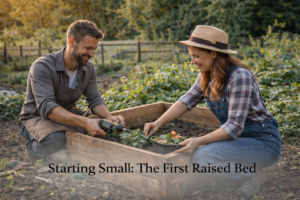
A raised bed is one of the simplest and most forgiving ways to begin growing food. It doesn’t require perfect soil, large space, or prior experience. With a few wooden boards, basic tools, and an afternoon of work, you can build something that immediately feels purposeful.
The beauty of a raised bed lies in its accessibility. You control the soil, drainage, and layout. Whether placed in a garden, backyard, or even a larger courtyard, it becomes a defined space where nature and intention meet. Filling it with good compost and soil feels like setting the foundation for something much bigger than vegetables alone.
Herbs and leafy greens are ideal first choices. Parsley, basil, chives, spinach, lettuce, and rocket grow quickly and generously. They don’t demand perfection, and they reward attention almost immediately. Within weeks, green shoots appear, and suddenly food is no longer something abstract, it’s something alive, growing, and responding to your care.
-
Growing Food Changes Perspective
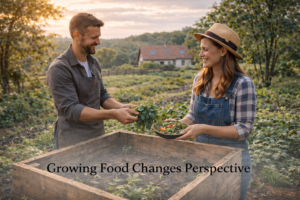
A raised bed is one of the simplest and most forgiving ways to begin growing food. It doesn’t require perfect soil, large space, or prior experience. With a few wooden boards, basic tools, and an afternoon of work, you can build something that immediately feels purposeful.
The beauty of a raised bed lies in its accessibility. You control the soil, drainage, and layout. Whether placed in a garden, backyard, or even a larger courtyard, it becomes a defined space where nature and intention meet. Filling it with good compost and soil feels like setting the foundation for something much bigger than vegetables alone.
Herbs and leafy greens are ideal first choices. Parsley, basil, chives, spinach, lettuce, and rocket grow quickly and generously. They don’t demand perfection, and they reward attention almost immediately. Within weeks, green shoots appear, and suddenly food is no longer something abstract, it’s something alive, growing, and responding to your care.
-
Falling In Love With Homesteading
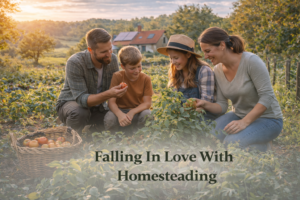
Homesteading grows on you quietly. There is no single moment where you decide, this is my lifestyle now. Instead, it unfolds naturally. One raised bed leads to another. One successful harvest leads to curiosity. Curiosity leads to learning, planning, and dreaming.
What makes this journey so rewarding is how achievable it is. You don’t need to abandon modern life. You don’t need acres of land. Modern homesteading fits alongside work, technology, and everyday responsibilities. It complements them rather than replacing them.
In a world driven by speed and convenience, growing something yourself slows time just enough to remind you what matters. And often, that first raised bed becomes the beginning of a more profound connection to food, to land, and to a way of living that feels more intentional, balanced, and fulfilling.
Homesteading doesn’t start with doing everything.
It starts with growing something.
Responses